Every soldier at a position has someone living with them: a dog, a cat, a drake — “whatever each one caught for himself.” And these animals get sick. In the 141st Brigade there are two people for exactly such cases, and soldiers come to them from every unit.
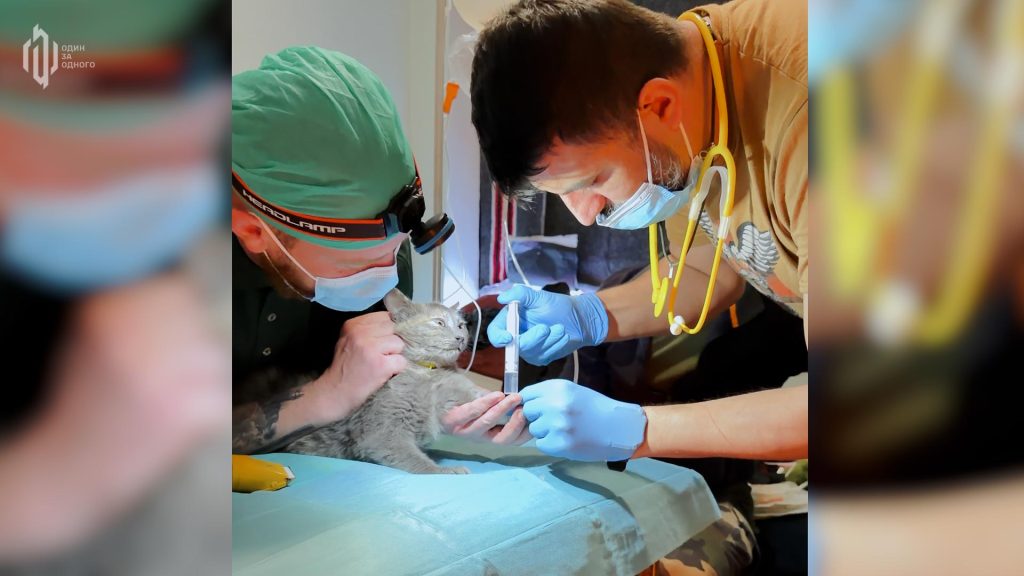
Plazma and Viking are medical instructors in the evacuation section of the medical company. In civilian life both were veterinarians.
Watch the full story in our video:
A colleague who became a brother-in-arms
Both studied at the Stepan Gzhytskyi National University of Veterinary Medicine and Biotechnologies in Lviv, and both worked at the municipal enterprise LEV. One treated cats and dogs in clinics, the other also had experience with predators. They went to war together.
“It’s really great when you have a colleague at work, and then he also becomes your brother-in-arms.”
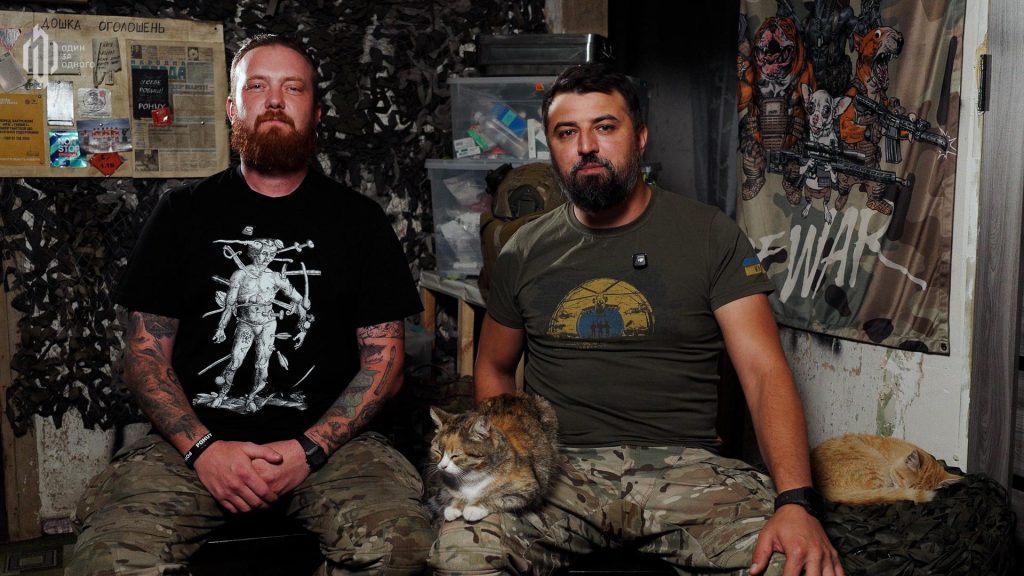
Animals have always been around them. Right now they have three cats: “two are here, the third one is an introvert.” In one of the sectors, a dog simply turned up at the half-abandoned house they were getting ready for winter.
“We were like: no, we’ll ignore her. She was like: no, I’m going to live with you. She turned out to be a Trojan dog — soon there were seven of them. The dog and six puppies. We found homes for all of them.”
Barter in the army
Veterinary work at the front needs the same things as in a clinic: proper conditions, instruments, medicines. There are no proper conditions. They carry their instruments with them — more than one set. After that, experience does the work.
“The guys say: our car has broken down, and you need to be mobile. Barter in the army: we take that cat and spay her, they repair the car. And that’s really how it works.”
They operate in an ordinary house: wipe everything down, disinfect, masks, sterile gloves. “We spay without complications. What decides it is experience and organising the process properly.” People come to them not only for spaying but also with infectious and parasitic diseases, because the animals that attach themselves to soldiers are mostly unvaccinated.
The goat that saved lives
When artillery began shelling the village, people left in large numbers and abandoned their animals. A neighbour from across the road came to say goodbye: “Boys, I’m leaving, I’ve got a pregnant goat in the shed — do whatever you want with her.” Just then the medics were given a new spot they had to move to and inspect for a new stabilisation point.
“We packed everything into the car and decided to take the goat straight away. We went in for the goat — and we see the chickens there are shell-shocked: sitting, not moving. We loaded them into a box and took the rooster too. Five hens, one rooster. And the time we spent on the goat… We drive into another village — an air strike begins, several guided bombs fall, and one hits the very building we were supposed to be in.”
The goat turned out to be a Trojan one too: she gave birth to kids. The goat and her kid found a home, and so did Fidi, the dog abandoned in the same house — “in very good conditions.”
The cat waiting in its little bed
Abandoned animals in villages look for people — they are social creatures. And they find soldiers. The hardest part, the medics say, is in the towns and villages that are being “taken apart by guided bombs, wiped out.”
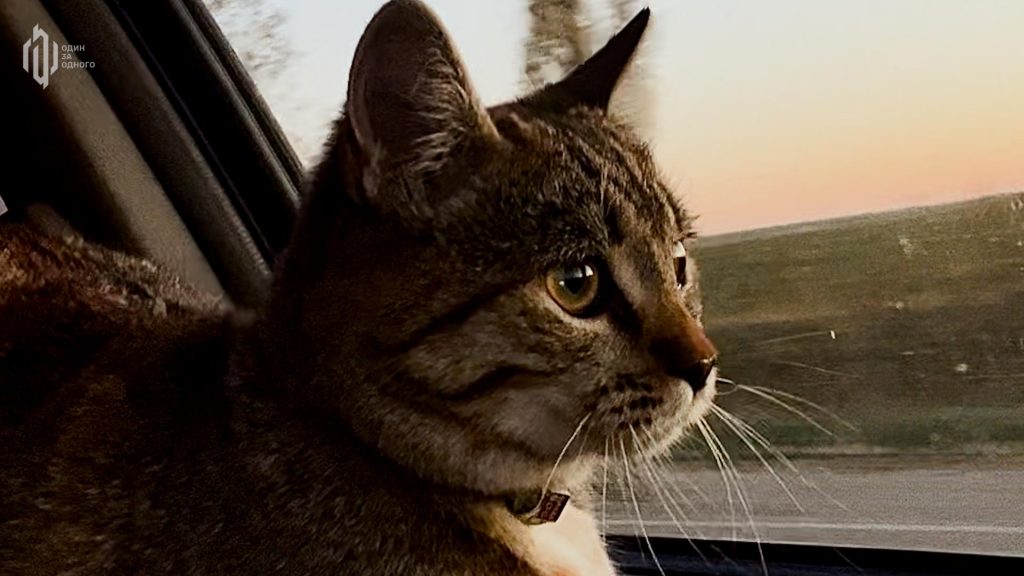
“You walk into a completely bombed-out house — and somewhere in there a cat is meowing. It’s lying in its little bed waiting for the people to come back. These cats need to be evacuated. And while we wait for the evacuation, we have to feed them somehow.”
Friends help with the food: the municipal enterprise LEV, where they used to work, and the companies Texlike and Kormotech.
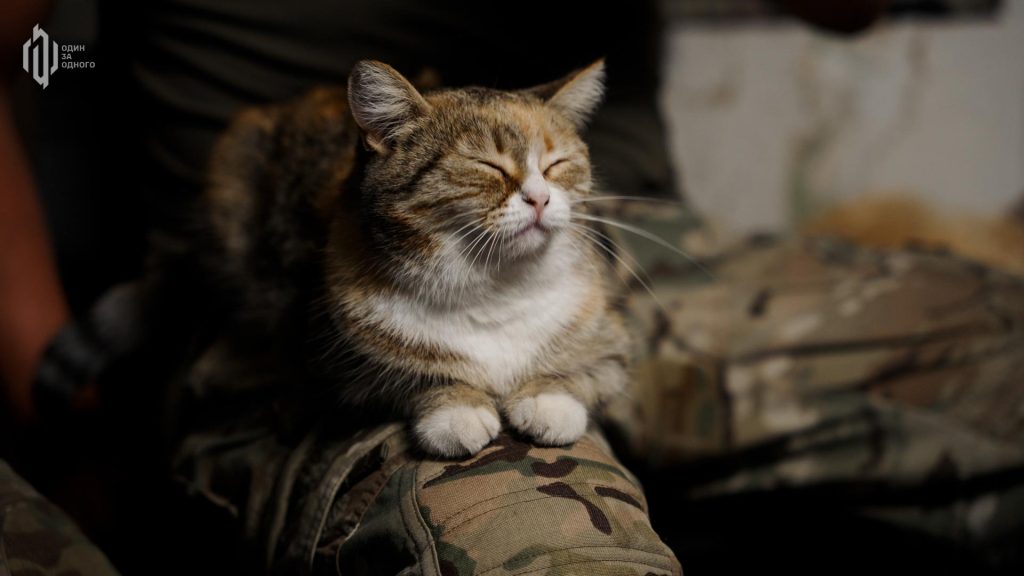
At the end of the conversation, Plazma and Viking ask for one thing. Not for themselves.
“Take in the animals that are being evacuated. Give them a place in your homes. They give warmth and love.”